

The Wrong Twin
Elijah Cole was the golden boy — a star athlete with NBA scouts circling and a $11M sneaker deal waiting. Meanwhile, his twin brother Micah just wanted to study, make law school, and stay out of the spotlight.
Then one night, a hit-and-run changed everything, and Micah woke up to police banging on HIS door for a crime his brother committed.
Micah was shamelessly framed by his own twin. Now he’s fighting from a prison cell to prove the truth before it's buried forever.
Their mother used to say that God sent them together because neither one could survive the world alone.
Elijah needed Micah to slow down, while Micah needed Elijah to keep pace. Patricia Cole described her sons as two parts of the same sentence—each incomplete without the other.
By the fall of their junior year at Southeastern University, that theory collapsed entirely.
Elijah Cole was everywhere.
His face appeared on the athletic department's homepage, on a banner outside the arena, and in a broadcast segment that aired every third Thursday titled “Next Ones: Who Goes Pro?” He was six-foot-four, weighed 225 pounds, and possessed undeniable talent, moving effortlessly on the basketball court. Opposing teams couldn’t stop him; they could only watch and hope he didn’t overwhelm them. Scouts had been watching him since his sophomore year. His agent, Conrad Victor, had been advising him since then, and by Elijah’s junior year, Victor had become almost an official family member. He joined holiday dinners, participated in group texts, and took part in nearly every conversation.
Micah Cole was an ordinary college student who mostly stayed in his twins’ shadow, but he was content with that. Unlike Elijah, who enjoyed being in the spotlight, Micah found comfort in books and articles. He dreamed of becoming a lawyer, having spent his teenage years tidying up after his brother. He led a quiet life, yet he was happy with it.
That is, until that fateful night, when his life would be turned upside down.
That night, Micah sat at a corner table studying for a Political Science midterm, holding a highlighter and with a cold cup of coffee beside him, quietly focused on his goal of personal growth. His GPA was a solid 3.7, and he saw this midterm as an opportunity to boost it before applying to law school. After several hours of studying, he went to the cafeteria for dinner and then returned to his dorm. He was asleep by eleven-thirty.
Elijah was at an off-campus party in a neighborhood not recognized by the university, where music played from ten and decisions ended soon after. Victor warned Elijah twice that week to stay low during pre-draft evaluations. Elijah agreed both times and truly intended to, but now, at 1:40 a.m., he was about to drive his luxury SUV with four drinks in him and the confidence of someone who had never been held accountable.
He took the back road back to campus. The long, winding road with a curve that ran past the old mill property, dark on both sides, with no streetlights for a quarter mile. He didn't see the man until he felt the impact.
The sound was unique. Elijah would spend his lifetime hearing it unexpectedly— in quiet rooms, before falling asleep, or amid conversations— a sound with no name in any language he knew. He braked. He sat. He looked in the rearview mirror at the shape on the road behind; he stayed there for about thirty seconds, his heart pounding with adrenaline. He scanned his surroundings — only an empty, dark road and no witnesses — then sped into the night without glancing back.
He called Conrad before he called anyone else. He answered his call on the second ring.
"C, I need your help,” Elijah called anxiously.
“Calm down, what do you need?” Conrad replied.
Victor earned his reputation as one of the nation’s top sports agents not by panicking, but by quickly and discreetly finding solutions away from the public eye. After Elijah explained the situation, he immediately understood the severity—the kind that can end careers, destroy endorsement deals, and turn a first-round projection into a cautionary story repeated in sports media for years. Sitting up in bed, he asked Elijah three questions: Where are you now? Is the car damaged? Did anyone see you?
Elijah provided his location and replied no to the last two questions.
Then he stated firmly, "Go back to your dorm. Don't talk to anyone, post anything, or text anyone except me. I'll handle the rest."
"Conrad, there was a man—" Elijah began.
"I know what there was,” he interrupted. “Go back to your dorm."
Victor's actions in the following ninety minutes remained a mystery to Micah for months. His plan was detailed and clever, with some even describing it as almost malicious. It involved carefully placing a phone at a specific spot, obtaining a witness statement from someone who owed Victor a favor, and reviewing surveillance footage from a campus camera—footage that normally required a key-card log and administrative access, but was mysteriously corrupted. A driver's description was assembled from limited angles, matching both Micah and Elijah equally, since they looked indistinguishable.
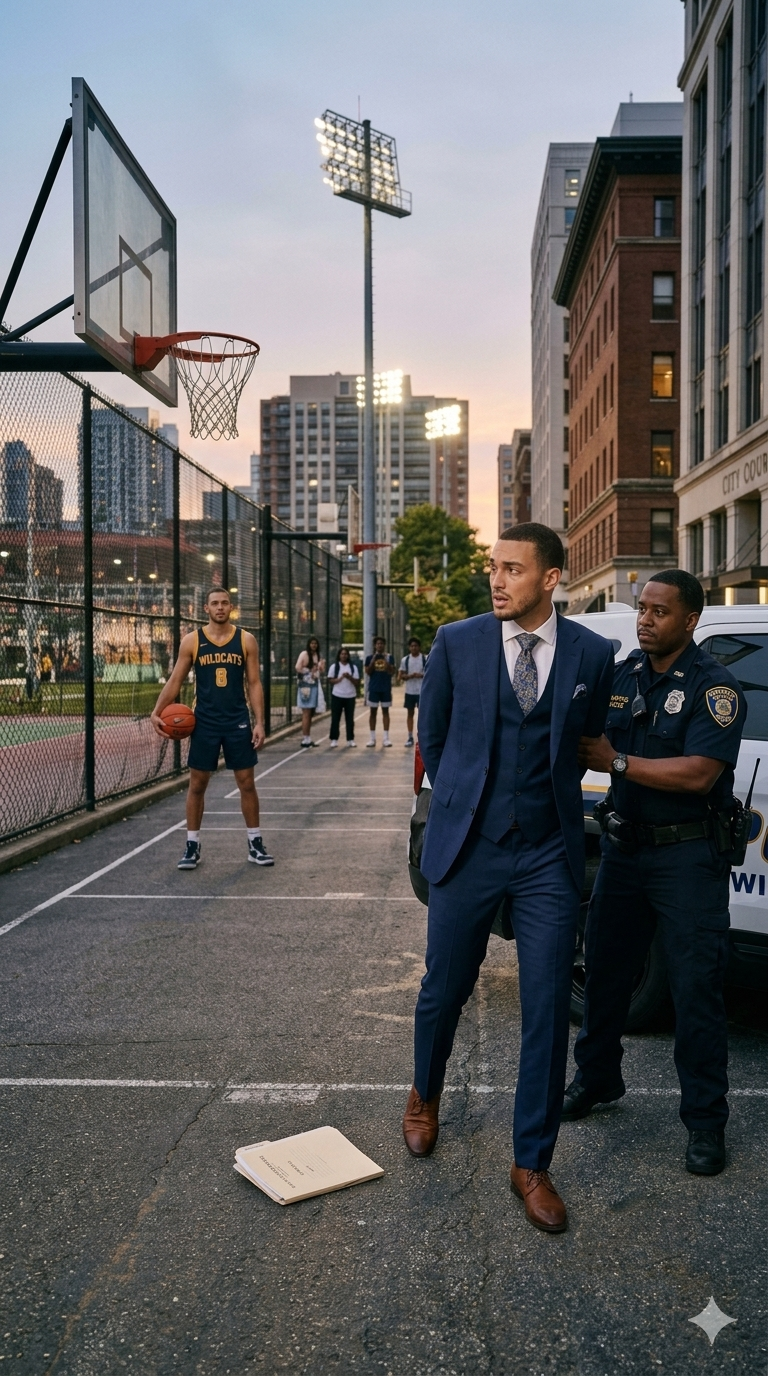
The next morning, campus police stormed into Micah's building at seven and banged on the door.
Micah awoke, startled by the noise, thinking he was having a nightmare. He tried to go back to sleep, but the police kept banging on the door.
Little did he know his nightmare had just begun.
He answered the door wearing sweatpants, with his Political Science notes still on his desk. They told him they needed him to come with them. Micah asked why, and they replied simply with two words: "vehicular incident." Micah stood his ground and informed the officers he didn’t own a vehicle, but they persisted. The chaos alarmed neighbors across the hall, who looked out their doors, and Micah gazed at them with an expression later described in the campus paper as eerily calm—though it was really the look of someone who didn’t understand the situation.
The officers took him into custody, and he was held at a detention center. Conrad visited him once before the arraignment.
“Conrad, there’s been a mistake, you have to help me,” he pleaded.
But Conrad just folded his hands on the table and looked at him with the kind of steady, untroubled eye contact that men deploy when they want you to understand that they have more power than you do and would prefer not to have to demonstrate it.
“There hasn’t been any mistake, Micah, you’re the culprit,” he stated firmly.
Micah glanced at him and quickly understood the situation. “Elijah coerced you, didn’t he? And you're doing this to avoid losing your valuable cash cow. I always suspected you were a snake, Victor, but I didn’t expect you would stoop this low,” he said.
"Nobody is going to believe you," Conrad said. "I want you to understand that before you waste everyone's time. The evidence points to you. The witness puts a man matching your description in a Range Rover registered to your brother, which you have used before—" he paused to let that land— "and your brother was in his dorm room with three people who will say so."
Micah looked at him blankly. He had encountered similar situations in mock trials. Conrad was about to pin Elijah’s mistake on him as a scapegoat. At that moment, he realized he had no chance of winning, especially with Victor manipulating events behind the scenes.
"You're a college kid," Conrad continued. "Your brother is a star. Think very carefully about what kind of story you want to tell, and think about who is going to be in that room listening to it."
He stood, straightened his jacket, and left without looking back.
Andrew Hatch, a thirty-one-year-old prosecutor with four years at the county DA's office, was quietly running for a judgeship that demanded a public profile he hadn't yet developed. The Cole case appeared on his desk like a gift—a reckless endangerment charge involving a near-death victim, a suspect with a closely related but not famous name, and a media market already paying attention. He pushed for the most serious charge supported by the evidence. When his supervisor suggested considering mitigating circumstances, Hatch responded with a smile, preferring to let the jury decide.
Garrett Foley, a 53-year-old man, had barely survived and was now in a rehabilitation center, struggling to walk again. He couldn't remember the driver or many details from that night. He was just walking home after a late shift when suddenly he was no longer walking.
The charge was a felony hit-and-run. With prior cases compiled by the system — including a dismissed citation and an incident report from a dorm dispute two years earlier — the prosecution sought a sentence that could take up most of Micah’s adult life. Of course, those charges belonged to Elijah, not Micah.
Meanwhile, Elijah declared for the draft.
It was a news cycle. There was a grand press conference, with Conrad standing proudly just off-camera, wearing the particular expression of a man watching an investment mature. Elijah wore a suit, answered questions, and said he was grateful and humbled, and that he couldn't wait to compete at the next level. Somewhere across the county, in a holding facility, Micah watched the press conference on a common room television with nine other men and said nothing.
Elijah went fourteenth overall. The arena erupted. He hugged Conrad on the stage. He signed a rookie contract and, two weeks later, a sneaker deal worth eleven million dollars over four years, and a sports drink partnership, and a lifestyle brand collaboration that would put his face in airports.
On the contrary, Micah’s trial date was set for the following October.
Time was on his side now, and frankly, that was all he could ask for if he was to reconstruct the ninety minutes between the accident and his arrest. He requested and was granted access to the prison law library, where he began reading slowly and carefully, with the methodical patience of a man who had once maintained a 3.7 GPA. He wrote letters to his girlfriend Simone that weren't really letters but encoded requests, references to files, names, and a specific administrative system at Southeastern's campus security office that he knew, from a work-study job two years prior, kept secondary backups on a server disconnected from the primary network.
He wrote to a journalism professor from his freshman year, who once told his class that the most important thing a reporter can do is follow paperwork.
He wrote to Garrett Foley's family expressing his condolences and vowing to ‘make this right’.
He wrote to a detective, one who was unaffiliated with Conrad, so as not to raise any red flags.
Over six months, Micah gradually constructed what resembled the truth, stemming from a six-by-eight cell with a metal toilet and a window overlooking a parking lot.
Three weeks before the trial resumed for its second phase, he had a folder of evidence.
The collection isn’t entirely comprehensive or airtight, but it’s sufficient—an administrative access log chain documenting who viewed the surveillance footage and when, a signed statement from a former parking attendant at the party venue recalling the Range Rover and the driver, a phone record subpoena that his assigned public defender finally, albeit reluctantly, agreed to file, and a notarized statement from someone in Conrad's circle who decided, for reasons Micah never fully grasped, that they were exhausted from bearing the burden.
He told his public defender he was ready to present it.
A few weeks later, just before his trial, a guard slid something under his cell door.
Micah looked at it from his bunk for a moment before he got up. It was a folded piece of paper — plain, white, no envelope, the kind of paper that existed everywhere and could be traced to no one. He picked it up and unfolded it. The message was short. It had been printed in plain block letters, the kind you could produce on any printer anywhere:
CEASE AND DESIST. OR ELSE.
Micah read it twice. Then he folded it, placed it in the folder between two other documents, and lay back down on his bunk.
He stared at the ceiling for a long time.
The block was quieter at this hour. The fluorescent light in the hallway cast its same pale stripe under the door that it cast every night. He listened to the familiar sounds — the distant clang of a door, someone coughing two cells down, the baseline hum of a building that never fully slept.
He thought, 'I will not be intimidated; I will end this once and for all,' just before closing his eyes.
But Micah couldn’t sleep. His mind was busy with thoughts of his mother in her yellow Sunday dress, Simone, and Garrett Foley learning to walk again in a facility across town. He also fantasized about regaining his freedom. His thoughts drifted to Elijah and how he betrayed him just to keep his own reputation intact.
However, none of that would matter once he presents his case in two days. Given the overwhelming evidence at his disposal, it would be unwise for a court to proceed with the trial. By that time, he would have completed his penance and would soon be a free man.
Justice would be served, and Conrad and Elijah would be exposed as the frauds they were. No more hiding behind fancy suits, cars, and lucrative endorsement deals.
The idea of justice being served brought a sense of calm to his spirit; some might say it gave him a sense of accomplishment.
He closed his eyes, this time with the intent of going to sleep, but a series of loud and unknown noises startled him—footsteps.
They were purposeful, unlike the guards’ meandering footsteps during the night shift. Eventually, they stopped in the hallway just outside his cell. He saw a couple of flashlight beams and heard keys rattle, but couldn’t quite make out the people beneath their black outfits. The hallway lights were off, after all.
Micah was wide awake—his heart pounding and his body fueled with adrenaline. He had kept his head down while in prison, so as to avoid making any enemies. Did these people have something to do with the note that the guards slipped under his door? Were they involved with Conrad?
Now was not the time for questions. Whoever was outside the cell clearly had ill intentions. The door creaked open slowly, and Micah rose, prepared to hold his ground. But as soon as the door opened, the flashlight blinded him, and suddenly everything turned dark and quiet.
Snake Skin
Betrayal doesn't always look like a knife in the back. Sometimes it looks like your best friend rebranding your life's work as his own.
Snake Skin a story about loyalty, revenge, and what happens when you underestimate the person you wronged.
The apartment smelled like cold pizza, caffeine, and ambition.
Max Wells and Sam Arroyo had been building Vaultline for fourteen months in that cramped two-bedroom in East Austin — a cybersecurity middleware platform that could sit between enterprise software stacks and detect intrusion patterns in real time. It was elegant and necessary. By March, it was almost ready.
They split the work evenly. Sam was the architect, dreaming in code and visualizing the system's framework before writing a single line. He stayed up until 3 a.m., not out of obligation but because the problem intellectually engaged him. Max, on the other hand, was the operator—skilled at navigating rooms, making people feel understood, and translating Sam's technical creations into language that captivated investors.
Max and Sam were not just business partners; many saw them as brothers, having been nearly inseparable since their freshmen year at Central Texas high school. After graduating, they both went to UT Austin, which strengthened their bond and eventually led to their joint business venture.
When they started developing Vaultine, both promised to put their friendship above business and profits. However, circumstances eventually revealed their naivety in the worst possible manner.
Two weeks before the launch, Max traveled to San Francisco for what he described to Sam as a "preliminary pitch" to a mid-tier VC firm. Typical procedure. Nothing particularly exciting.
He returned to Austin with a large check and, more importantly, documents proving he was the sole owner and inventor of Vaultline. He discussed the check with Sam, who was excited about the news, but he kept the documents hidden from his partner.
Over the next few days, Sam noticed that Max was fidgety around him and kept his answers curt and concise, almost as if he were afraid of revealing something. This behavior alarmed Sam, as Max was usually outgoing, animated, and lively while working on Vaultline.
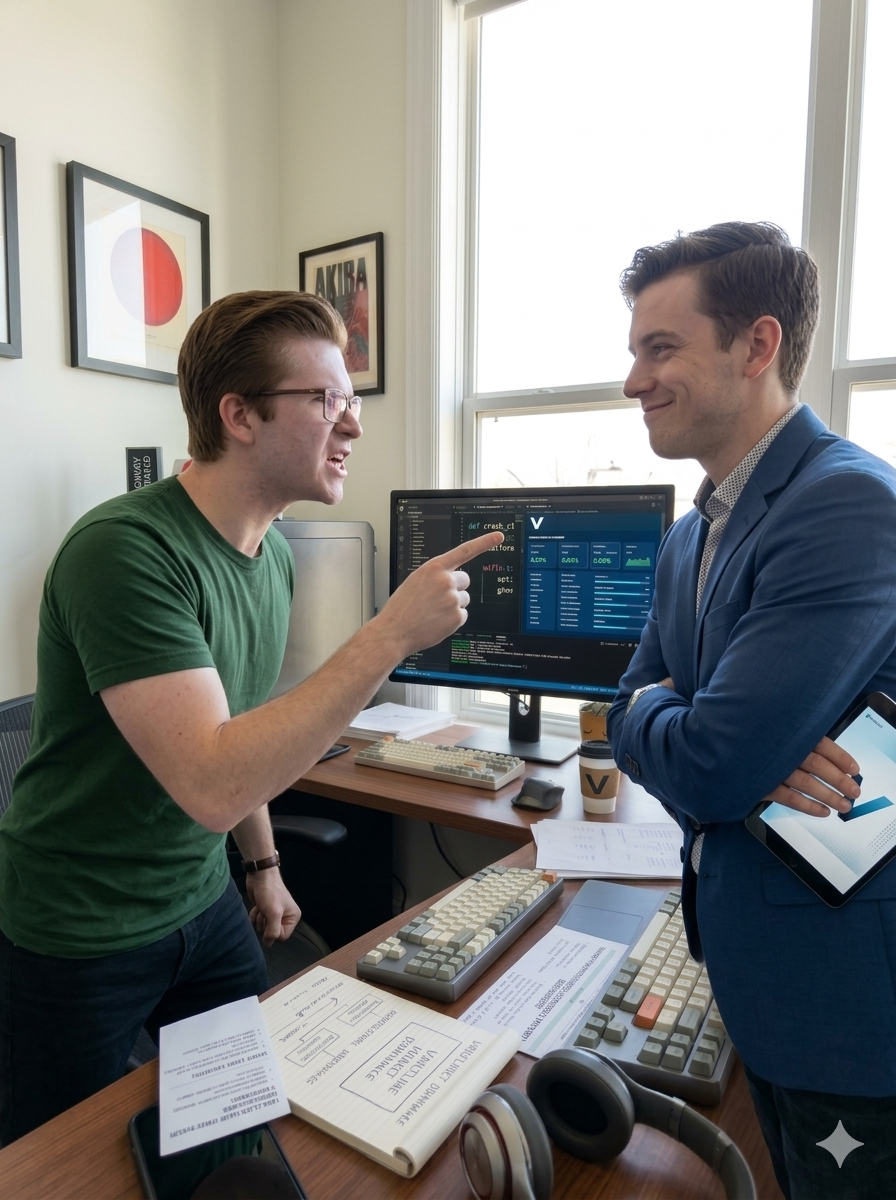
“Yo, did you catch something over in SF?” Sam asked.
“Nah, why?” Max replied.
“You’ve been weird, dude. This isn’t like you,” Sam added.
Max responded, "Just stressed about the launch, that’s all."
Sam chose not to push the issue further. Having spent years with Max, he understood when his friend was reluctant to discuss something. Yet, a gut feeling told him that something was off with Max.
A few days later, Sam learned about the worst news in the usual way — from someone else, at an inopportune moment, in a casual tone that made it feel worse. A mutual acquaintance mentioned seeing the press release: Vaultline Security, founded by Max Wells, backed by Golden State Partners.
Founded by Max Wells. It couldn’t be, Max would never do such a thing. He would never betray him in such a manner that would cut him off entirely. They had sworn they would never betray each other at the beginning of their journey. None of this made sense.
Sam read the article and later verified its legitimacy. Immediately, he called Max. Once, twice, thrice, and each time there was no answer.
What Sam experienced was not quite grief. Unlike grief, which has a gentle, mourning quality for something loved, what he felt was more like a fire trapped inside a closed room — no escape, devouring everything.
The anger struck first—intense, raw, and destructive, like a tornado. He forcefully threw his laptop bag at the wall, cracking the drywall. Then, he punched the cracks until a large gash appeared, leaving his knuckles bloody. At two in the morning, he screamed into a pillow until his throat was raw. He often drowned his rage in alcohol, throwing empty bottles onto the street in drunken fits. He wrote countless text messages to Marcus but deleted them all, as none could fully convey his feelings.
A few weeks later, the hate grew darker, quieter, and more personal. He kept replaying each conversation, late-night talk, and every time Marcus laughed at his jokes or said, "We're going to change everything, man." He revisited their original pact: friendship first, then business and profits. He remembered every moment from high school through college graduation. The hate wasn't directed at Max as a stranger — it was for Max as a friend, or more precisely, a traitor, which made it even worse.
Following the hate, resentment took hold—hate with nowhere to go. It ingrained itself in him like sediment. He began resenting people he had never met: the Golden State Partners in their glass offices, the journalists crafting puff pieces, and the users downloading Vaultline, unaware it was created by a ghost. He even resented himself for being naive enough to think friendship could trump greed.
And finally, overwhelmed by everything, came the sadness. Pure and boundless—an empty void of darkness, haze, and blurred vision. No evident path or direction, and certainly no will to live. This type of sadness doesn't announce itself with tears but quietly reshapes everything — how you sit, eat, and what you look forward to.
Sam stopped coding, answering emails, and, above all, making money. He began to lose his freelance clients one by one, mostly because he stopped pretending to care. He moved out of their two-bedroom apartment in Austin and into a cheaper studio. Then, as his money dwindled, he moved into a former classmate’s basement. He ate poorly and battled insomnia, alcoholism, and depression. His bank account dwindled to an embarrassing amount. He called his mother once and told her he was fine, but his voice betrayed him. She didn't push, and he was both grateful and ashamed.
Meanwhile, Vaultline's monthly active users crossed fifty thousand. Max rang a bell at a launch party Sam saw on Instagram. He looked tan, happy, and, most importantly, successful.
Sam chucked his phone against the wall and sat in the dark for a long while, lost in thought as a fire started to ignite in his stomach.
He can't recall the exact moment he chose to get back up. There was no dramatic morning or clear before-and-after moment. It was simply a Tuesday, four months into his hardest period, when he opened his laptop not driven by ambition but by boredom, and found the code still there. All his old notes. All his architectural diagrams. The genuine ones — the ones Max had never fully grasped.
He began writing, started flowing again. Eventually, he developed a new creation—not Vaultline, but something that had an intrinsic understanding of Vaultline, since Sam had built Vaultline from the inside out. He named this new project Oogway, and this time, he kept it secret, sharing it with no one.
During the day, he took small contracts just to survive and ‘keep the lights on.’ At night, he focused on building. He became more purposeful and deliberate — the reckless enthusiasm of early days gave way to a colder, more calculated approach. He wasn't racing anymore; he was aiming.
Oogway was both a superior middleware platform, surpassing everything Vaultline offered, and a subtle, perfect match for Vaultline's system. Sam was familiar with every architectural choice, every shortcut Max had authorized without oversight, and every weak spot in the foundation. He had constructed the house himself and knew exactly where the walls were hollow.
He didn't interact with Vaultline, nor did he need to—at least for now. Instead, he observed from a distance.
Golden State Partners urged Max to scale quickly — perhaps too quickly. The engineering team he recruited was skilled but unfamiliar with the codebase, as Sam was. Patches were made hastily, leading to increased technical debt. By month sixteen, the platform began to show signs of strain. A key client flagged unusual activity, followed by another. Support tickets surged. Meanwhile, a cybersecurity trade publication questioned, "Is Vaultline Losing Its Edge?"
Sam read the new article with his morning coffee and a fried chicken biscuit on the East Side—his usual breakfast during college.
Then, calmly and methodically, he began dismantling Vaultline.
His introduced exploits were subtle—not acts of vandalism but rather pressure tactics. They included ghost traffic that stressed authentication systems and timing attacks revealing session vulnerabilities. While these did not directly harm end users, they caused Vaultline's engineering team to waste time chasing false leads, patching incorrect areas, and becoming increasingly exhausted and demoralized. Sam carefully observed, analyzed, and documented each fix.
Meanwhile, Oogway quietly built its own user base without relying on press. It spread through word of mouth within developer communities, where people shared what genuinely worked. Its performance metrics were impressive and discreet. By the sixth month, it was surpassing Vaultline across all key measures.
Golden State Partners summoned Marcus to urgent meetings after losing a key contract to a competitor. Two senior engineers resigned, and the Vaultline valuation, which once fueled Max's smiling press quotes, started its prolonged decline.
Max called on a Thursday evening.
Just as Max had done six months earlier, Sam let it ring. Then he picked up on the last ring before voicemail.
"Sammy." Marcus's voice was warm and instantly recognizable, perfectly capturing the tone of their long-standing friendship. "Man. I know. I know. I've wanted to call for so long, but I just didn't know what to say."
Sam said nothing.
"I made a mistake," Max continued. "I panicked. Golden State Partners wanted a sole founder, and I — I told myself I'd make it right, that I'd bring you in properly once things stabilized, and then it just kept moving, and I kept telling myself there would be a better time—"
"There's no better time," Sam said. It was the first thing he'd said.
"I know." There is a pause. "I miss working with you. I miss you. Whatever Vaultline has now isn't what we built together. You can probably see that from where you are." A brief, self-deprecating laugh follows. "The thing is, I need you. The company needs you. And I want to set things right. Genuine equity. True partnership. Everything your name should have been on from the start."
Sam closed his eyes.
Max continued speaking about the early days, late nights, and their unique problem-solving style, in which they often finished each other's sentences on a whiteboard. He excelled at this, as he always had, turning nostalgia into a proof of something meaningful.
"Come back," Max said. "Let's finish what we started."
There was a long silence.
"Send me the terms," Sam said at last. "I'll look them over."
Max sent the terms that evening, and on Monday morning, Sam walked into Vaultline’s office.
It felt odd to be back in an office designed around something he created. He saw his own choices reflected in the architecture and clearly noticed where Max's team had made mistakes. He spoke little on the first day, instead observing, analyzing, and taking notes.
On Wednesday, Max had a lunch meeting with someone from Golden State Partners. Daniel walked past the glass-walled conference room on his way to the kitchen, mug and notebook in hand, unhurried.
He almost didn't stop. However, Max's voice was relaxed and loose, the way it got when he felt comfortable. He couldn’t help but eavesdrop, well listen as Max wasn’t exactly speaking quietly.
Honestly, man, it wasn't even difficult. Just a touch of nostalgia and Sam caves in. He's always been this way—too emotional. I only needed to keep him steady for six months while we update the backend, then we can renegotiate from a stronger position—
Sam stood motionless outside the glass, suddenly realizing Max had deceived him again and had become someone unrecognizable.
He could see Max in the reflection — leaning back with one arm over the chair, smiling a smile Sam had once believed was sincere.
He stood there for precisely thirty seconds, possibly the longest thirty seconds he's ever experienced.
He then returned to his workstation, sent a brief email to Max’s personal address — ‘I quit, effective immediately, keep the equity’ — closed his laptop, and picked up his bag.
He nodded to the receptionist on his way out. She smiled and said , "Have a good one.” He said he would try.
Max urgently attempted to reach Sam, going so far as to visit his apartment unannounced. But Sam immediately called the cops and had Max removed from the premises.
“This isn’t over, Sam,” Max threatened as the cops escorted him away.
Sam ignored Max’s threat entirely, returning to his apartment to work on Oogway. He didn’t bother engaging with Max, confident that Vaultline was destined to collapse soon.
Oogway went public the following spring. The release was low-key, which is typical for authentic projects. No bell or celebration took place. Sam gave a single interview to a developer-focused publication, explaining what he had created and why, before returning to his work.
As Sam predicted, Vaultline filed for Chapter 11 eleven months later.
Max sent one more message, much shorter this time, no nostalgia in it at all — just the particular silence of a person who finally understood they had nothing left to trade.
Sam read it and then archived it without replying.
He had learned, at significant cost, something that was always true and always would be:
A snake is a snake, no matter how many times it sheds its skin.
A Summer Night Boardwalk Stroll
She laughed in his face when he said he loved her. Five years later, she's still dreaming about him — because he never made it home. Some losses stay with you forever. One moonlit night. One last kiss. One dream she couldn't escape.
Some goodbyes don't ask for permission. Some losses you never fully process — until they show up at 3 am and shatter you all over again.
It was a cool summer night. Ashley was sitting on the boardwalk pier wearing her favorite yellow sundress with an open bottle of wine by her side as she swung her feet off the ledge. She had just learned that her parents were about to divorce after twenty years of marriage.
As she stared at the horizon, a warm but gentle hand tapped her shoulder. She turned around; it was Dylan.
“Come with me, Ash; let’s take a stroll along the beach,” he said.
At first, she was reluctant as Dylan and her weren’t exactly on speaking terms. The last time they saw each other ended with her laughing in Dylan’s face after he confessed his love for her. Was this his way of getting his revenge?
Her brain said no, but her heart said yes. Ultimately, her heart won, thanks to some help from the Pinot Noir.
“Where are we going?” she inquired nervously as she took his right hand.
Dylan gave her a warm, reassuring smile and calmly stated, “It will all make sense soon, Ash, I promise.”
Dylan’s answer was vague, but his serene and sincere demeanor alleviated Ashley’s anxiety. As they began their stroll, an unusual calmness embodied her—almost as if it were magical. Nevertheless, her mind was still wandering about Dylan’s intentions.
“Why is he so calm? Does he hate me? Is this how my life is going to end?” she thought.
As they strolled down the boardwalk, Dylan asked about her family, particularly her brother, who had been deployed. Ashley assured him he was okay and doing his best to survive.
“Your brother is a brave soul; I miss him,” he added somberly.
Not wanting to dwell on his sadness, Dylan quickly changed the subject as they approached the sand.
“You seem down, Ash; what’s going on with you?” he asked, concernedly.
Ashley, like Dylan, was the type of person who refused to share her feelings. To her, vulnerability equaled weakness. But tonight, she felt different. Dylan had captivated her under his charming spell, and she couldn’t resist telling him the truth.
“My world is falling apart, Dyl. My parents are divorcing, I hate my job, and I am struggling to maintain an emotional connection with my husband. I feel stuck, unlike myself, and sometimes I question whether life is worth living anymore,” she stated as she lowered her head in despair.
Dylan listened but said nothing. The deafening silence triggered her anxiety and insecurities. She felt stupid and weak and wanted to dig herself into a pit in the sand.
“He probably thinks I am clinically insane; why did I just say that?” she thought as she internally scolded herself.
With a gentle touch, Dylan raised Ashley’s chin with his right hand and locked his bright blue eyes on her light hazel eyes—she felt her heart race. She had never seen this side of Dylan before. He had always been the timid and reserved ‘nice guy’ but never masculine and domineering.
Under the summer moon, a whirlwind of emotions overwhelmed her as the tension built.
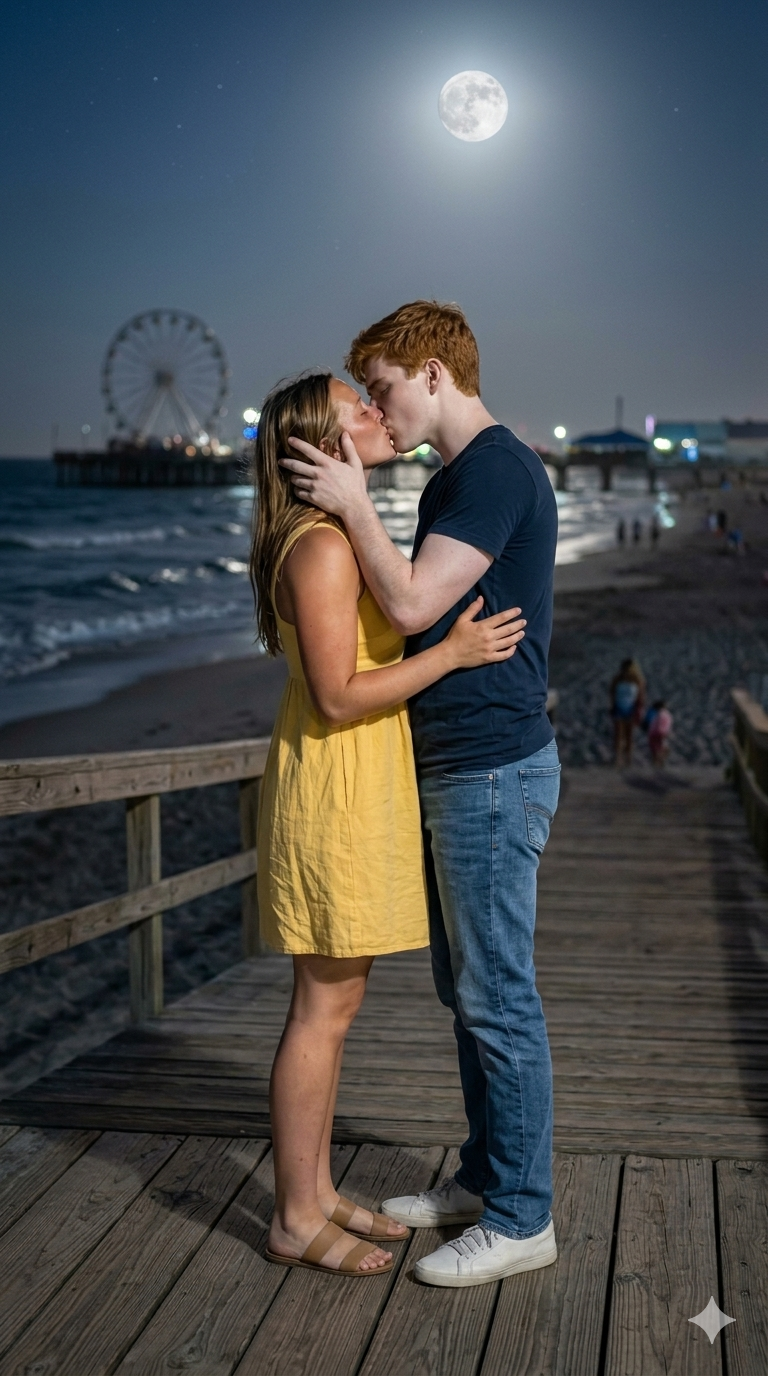
Dylan briefly gazed at her lips, then at her eyes, and again at her lips. Deftly, he placed his left hand on her lower back and pulled her closer. He slowly caressed her face and gave her a long, heartfelt kiss. It was euphoric and magical, that is, until her logical brain betrayed her.
Suddenly, she shoved Dylan away and angrily yelled, “What are you doing, Dylan? I am married! You and I can never be a couple, and I thought I had made that clear by now!”
But internally, she was furious with herself for ruining such a magical moment and potentially pushing Dylan away forever.
“I know, Ash, this is my way of saying goodbye,” he replied in a soothing, masculine voice.
Instantly, her gaze transformed from anger to sadness. The California waves crashing against the sand were deafening as reality set in—Dylan was leaving. She had, in fact, pushed him away forever. This was all her fault. She could sense her eyes watering up as she stuttered, “What do you mean, goodbye?” She tried to hide her tears but was wildly unsuccessful.
With a graceful move, Dylan wiped her tears— he always knew exactly what to do when she was distressed. “I’m moving to Texas; I was offered a job there. I leave tomorrow morning,” he mentioned.
Ashley was inconsolable. Dylan had been the one person she could count on when her brother was deployed. He and his brother had been best friends since they were teenagers. However, she began to take him for granted— after all, she knew he secretly had a crush on her but wouldn’t act on it out of respect for her brother. Eventually, she began to take advantage of his kindness, and Dylan, upon realizing his role in her life, quietly distanced himself. To make things worse, she mocked him after he confessed his love for her. Years later, she tried to make amends by inviting him to her wedding, but Dylan never showed.
She broke out sobbing. “What do you mean? Why are you leaving me?” she wailed.
Dylan waited patiently before removing Ashley’s hair from her face. He could tell she was distraught. Ashley’s eyes were swollen with tears, which were the culprits for the mascara running across her cheeks. The sight of Ashley being so devastated practically broke his heart, but he knew he must put himself first this time.
“I am prioritizing myself this time, Ash. It’s time I start doing what I want to do,” he declared with a warm look.
“What do you mean?” she asked in a muffled tone. But deep down, Ashley knew exactly what he meant. Dylan had always prioritized others’ needs, including hers, over his own. He was valued for his availability and would inevitably take on others’ problems, which often led to burnout.
“It means it’s time for me to go, Ash,” he whispered as he locked his shining blue eyes on her again. His attention then turned to her lips. He kissed them passionately, but this time, he ended the kiss first. Then he turned around and walked away swiftly into the cool, breezy night. His silhouette faded with each step until he reached the dimly lit parking lot. He turned on his car, revved the engine as usual, and sped away.
Ashley trotted clumsily behind; the thick sand hindered her progress. “No, Dylan, wait!” she shouted.
Suddenly, Ashley woke in horror, a cold sweat running profusely down her forehead. Startled by her screams, her husband woke up frantically. “Ash, are you alright, sweetheart?” he muttered in a sleepy voice.
“It’s Dylan,” she gasped in a state of panic. Her husband inched towards her and lovingly embraced her. “Ash, your friend Dylan was killed by a drunk driver on his way home from the boardwalk five years ago. He’s gone, honey, let’s get some sleep,” he murmured.
A Bucket of Crabs
They called it “competitive spirit,” but we called it survival. Playing at Garrison State wasn’t football- it was psychological warfare.
We wore the same uniform, but we were never a team. The worst part? The coaches encouraged it and built a culture around it— trust no one, protect yourself, and don’t you dare think about breaking down.
This is the story of what really happens inside Garrison State Football and why winning isn’t always what it looks like from the outside.
I learned what the title meant in my third week at Garrison State.
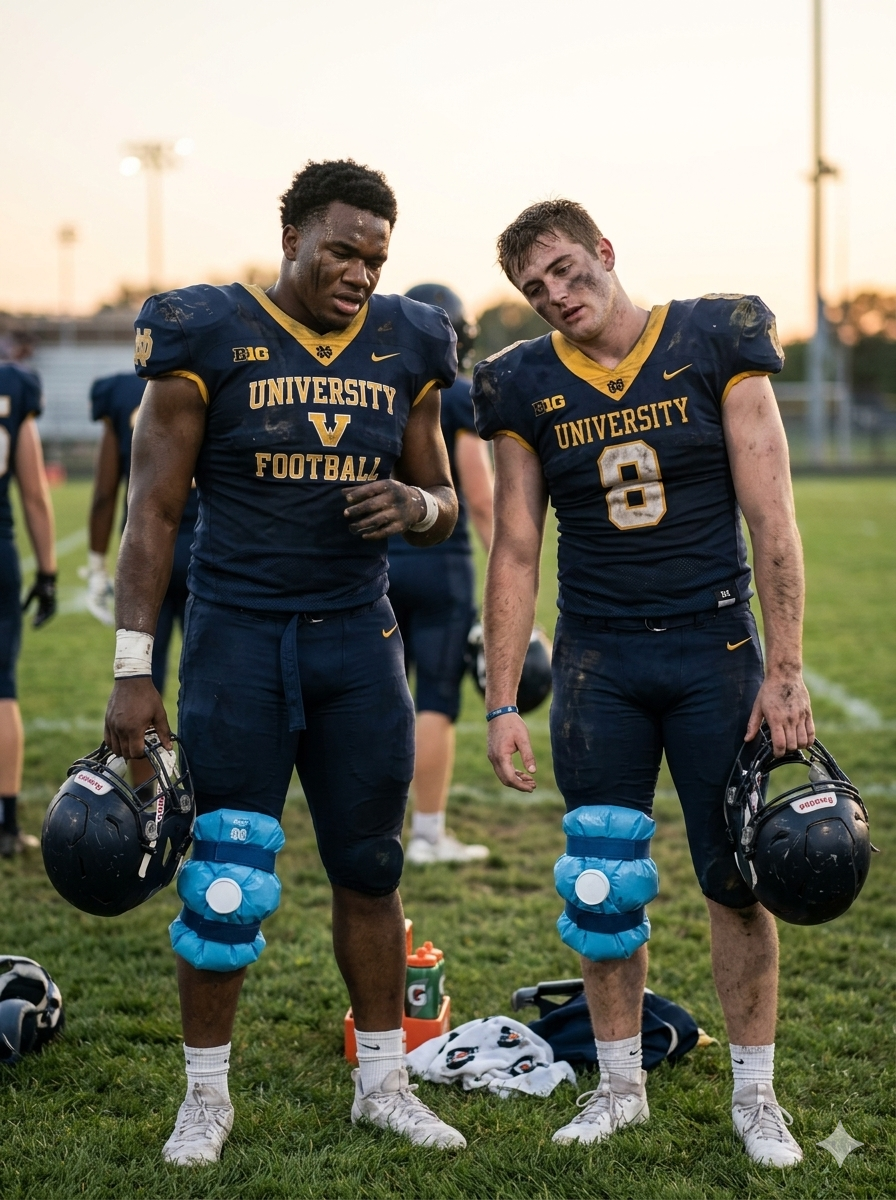
"You ever see crabs in a bucket?" my roommate Devon asked, sitting on his bed with an ice pack pressed against his knee. Someone had clipped him low during a non-contact drill. "They'll climb over each other, pull each other down, do anything to get out. But none of them ever make it. They just drag each other back to the bottom."
He gestured around our dorm room—at the two of us, freshman running backs competing for the same spot on the depth chart, living together because the coaching staff thought it would "build competitive fire."
"That's us," Devon said. "That's this whole program."
I didn't want to believe him. I am Jacob Torres, a four-star recruit from Texas, and I have dreamed of playing D1 football since I was eight years old. I have worked too hard, sacrificed too much, to accept that the reality would be anything less than what I imagined.
But Devon was right.
It started small.
My cleats went missing from my locker before our second practice. Not stolen—just relocated to the laundry bin, buried under wet towels. I was late to the field, running in slides until the equipment manager found them.
Coach Brennan made me run gassers after practice. "Lack of preparation is lack of respect," he said, ignoring my explanation that someone had moved them.
Two days later, Devon's practice jersey went missing. Soon after, my mouthguard vanished. Later, a fellow freshman's playbook also disappeared, leading to him being scolded in front of the whole team for being "unprofessional."
The older guys found it hilarious. We were just learning the first rule of Garrison State football: trust no one, protect everything, and understand that everyone around you would step on your throat for half an inch up the depth chart.
"It's always been like this," said Marcus, a junior linebacker who apparently decided I wasn't enough of a threat to be worth sabotaging. "Builds toughness. Coaches love it."
"They know it's happening?" I asked with concern.
Marcus laughed, "Know it? They encourage it. Coach Brennan calls it 'competitive spirit.' Says the team that battles hardest against itself will destroy everyone else."
I watched a senior cornerback "accidentally" spike another player's Gatorade with something that had him rushing to the bathroom during meetings. I saw position groups huddle together, whispering, planning, treating practice like espionage. I noticed that the training staff always seemed to look the other way when things became "accidentally" violent.
"This isn't normal," I told Devon after a particularly brutal practice where I had seen three separate incidents that looked more like assault than football.
"No," Devon agreed, examining a new bruise on his ribs. "But it's normal here."
The real education came during live drills.
I was a second-string running back, getting reps with the twos while trying to prove I deserved a shot with the ones. The starter was Trey Williams, a junior with NFL dreams and the morality of a cornered animal.
During a routine inside zone play, I took the handoff and hit the hole. Their linebacker—Trey's roommate, I noticed—came in high and late, launching himself at my knees with his helmet.
I fell hard, twisting my ankle underneath me.
"Walk it off," Coach Brennan yelled. "This is football, not ballet."
I limped to the sideline, where the trainer gave my ankle a cursory glance and taped it without much care. "You'll be fine," he said, already moving to the next injury.
I wasn't doing well. My ankle swelled up to the size of a grapefruit, and I could hardly put any weight on it. However, I couldn't complain or show weakness because three other freshmen running backs were ready to take my reps.
That night, Devon assisted me back to the room as we both hobbled—him with his injured knee and me with my rolled ankle.
"You think it was on purpose?" I asked.
"Does it matter? Trey needed you hurt. His boy delivered. That's how it works," he replied.
"But we're on the same team," I cried in frustration.
"No," Devon said firmly. "We wear the same uniform. That doesn't make us a team."
By October, I had learned to sleep with my wallet in my pillowcase and my phone in my hand.
Money often vanished from lockers, along with textbooks, laptops, and other valuables that weren't secured. Although the coaches and everyone else were aware of this, no one took action.
"Boys being boys," I heard Coach Brennan tell an assistant after a freshman reported that his iPad had been stolen. "They need to learn to be more careful with their belongings. The world's full of people looking to take advantage."
The irony was suffocating. We were being taught that taking advantage of each other was just preparation for the real world, that morality was weakness, that the only thing that mattered was getting yours before someone got theirs.
I watched a sophomore plant ‘goods’ in a teammate's locker before a room check, getting him suspended for three games and opening up a starting spot. I saw offensive linemen deliberately miss blocks on running backs competing for carries, allowing them to get blown up by linebackers. I witnessed position coaches pitting players against each other in increasingly destructive ways, then acting shocked when someone got hurt.
The worst part? It was working.
We were 7-1, destroying opponents with a viciousness other teams couldn't match. Because we'd been hardened by attacking each other every single day. We'd learned to see everyone as an enemy, every play as life or death, every opportunity as something to be seized at any cost.
"Winning fixes everything," Coach Brennan would say, and apparently, he was right. The local media praised our "intensity" and "competitive culture." Alumni donors loved our "old-school" approach. And every Saturday, we took the field like soldiers who'd survived war with each other, ready to take it out on whoever was unlucky enough to face us.
But the cost was invisible to everyone who wasn't living it. The breaking point came in November.
Devon and I were both listed on the travel roster for our game against Wyoming State, both hoping for garbage time carries. We had survived the season together, forming an unlikely alliance in a world designed to make us enemies.
The night before the game, I woke up at 2 a.m. to find Devon's bed empty. I found him in the bathroom, bent over the toilet, shaking.
"What happened?"
"Nothing," he said, but his voice was wrong—slurred, weak.
"Devon—" I said.
"Someone put something in my water bottle. I saw Trey watching me drink it, smiling," he replied weakly.
My stomach dropped. "We need to tell someone. The trainers, Coach,” I urged.
"And say what? I can't prove anything, but I think someone poisoned me. You know what they'll say," Devon responded, laughing bitterly. "That I'm making excuses. That I'm soft. That I can't handle the competition."
He was correct. I have seen it before—players who spoke out about the culture or tried to highlight the sabotage were often labeled as problems, malcontents, or not team players.
"You need a doctor," I said.
"I need to play tomorrow. If I miss this game, I'm done. There are four guys behind me ready to take my spot," he fired back.
"Devon, this is insane," I stated.
"Yeah," he agreed. "But it's where we are."
I assisted him back to bed, observed him fall into restless sleep, and clearly realized that we were prisoners. Prisoners of a system that forces us to harm one another to survive, rewarding cruelty while punishing kindness, turning allies into enemies and labeling it as "building character."
Coach Brennan loved to quote Vince Lombardi: "Winning isn't everything, it's the only thing."
But he never finished the thought: what happens when winning requires you to lose yourself?
We won the game. Devon played through whatever had been done to him, running for sixty yards and a touchdown. Trey started ahead of both of us, like always.
In the locker room, Coach Brennan gave a post-game speech about brotherhood, family, and how this team was special because we pushed each other to be better.
“Iron sharpening iron,” he shouted proudly.
I looked around at my teammates—some nursing injuries inflicted by other teammates, some counting the cash they'd stolen, and others already plotting the next sabotage, the next way to drag someone down so they could climb higher.
A bucket of crabs. None of us is escaping. All of us pulling each other back down.
And the coaches on the sideline, watching it unfold, encouraging it, believing that the toxicity made us stronger when really it was just making us cruel.
I transferred after that season to another mid-major D1 school in Texas, where players genuinely supported each other, coaches focused on building culture instead of weaponizing competition, and winning was important but not at the expense of basic human decency.
Devon stayed. He said he'd invested too much to walk away, that he could handle it, that next year would be different.
I heard he made it to second-string by his sophomore year. Then someone cut his brake lines before a road trip—he was okay, but the car was totaled. He never could prove who did it. The coaches called it a "tragic accident" and moved on.
He transferred to junior year. Last I heard, he'd quit football entirely, saying he couldn't enjoy something that had been poisoned so thoroughly.
Sometimes I wonder how many guys like us cycle through programs like Garrison State. How many learn that success means stepping on others, that teammates are just obstacles, that morality is something you can't afford if you want to win.
And I wonder what happens to them after their football career ends. After they've spent their formative years in an environment that rewards the darkest parts of human nature. After they've learned that those in charge won't protect them, won't stop the toxicity, and will even promote it if they believe it yields results.
Coach Brennan is still there, still winning, still building his program on the backs of kids tearing each other apart.
Still filling his bucket with crabs. Still watching them drag each other down. Still calling it excellence.
The Perfect Coaching System
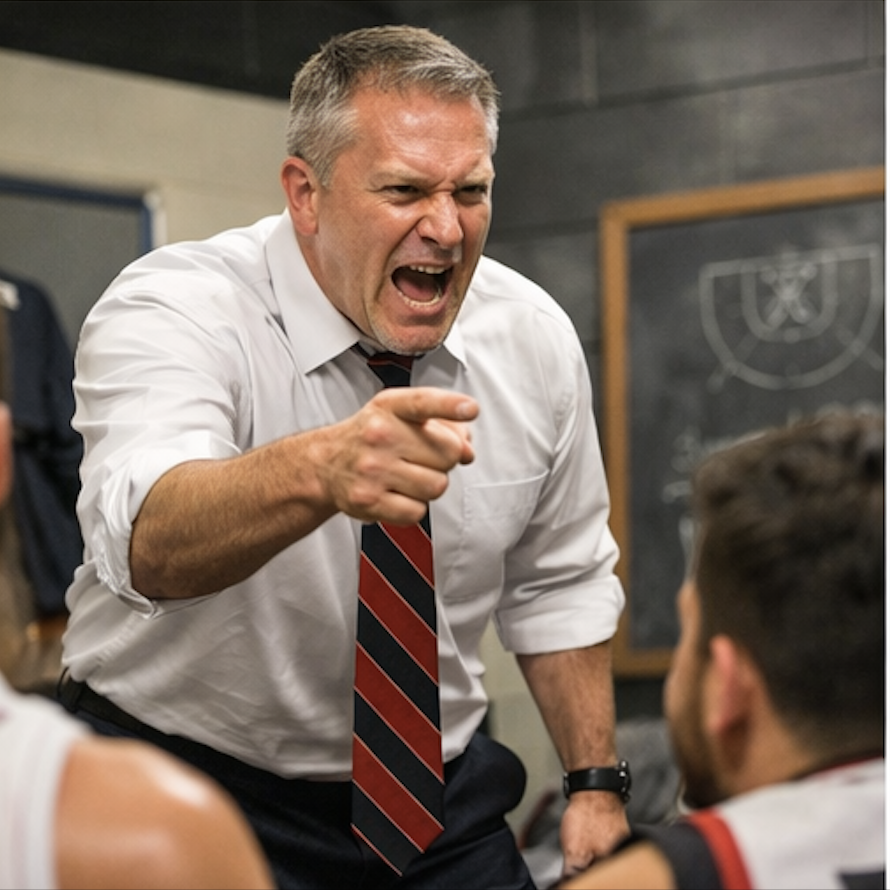
Coach Raymond Miller had a perfect coaching system. Every drill timed perfectly, every play diagrammed precisely, and every mistake cataloged. With his system in place, the Riverside High Wildcats were the preseason favorites to capture the state title. But when the team starts to struggle and fails to meet Miller’s expectations, questions arise—is Miller’s system flawed, or are the players at fault?
Coach Raymond Miller had a system, and his system was supposed to be perfect.
Every drill timed to the second. Every play diagrammed with mathematical precision. Every mistake cataloged, reviewed, and dissected until the player who committed it understood—really understood—how they'd failed not just themselves, but the entire program.
"Excellence isn't an option," Coach Miller would say, his voice echoing through the gym. "It's the baseline. Remember, what you do to yourself, you do to this team."
The Riverside High Wildcats had started the season ranked third in the state. They had talent—real talent. Marcus Webb, a Gonzaga commit, could thread passes through defenses like a surgeon. Tyler Chen, whose three-point shot was practically automatic, committed to Duke. Jamal Foster, the 6’6 forward and future Arizona Wildcat, was unstoppable in the post--- a man amongst kids.
On paper, they were deemed invincible.
But they were 4-7, and every loss felt like a gut-wrenching punch. But why?
Practice was where it happened. Where fear took root and spread like wildfire.
Mistakes were unacceptable and a sure way to be humiliated by Coach Miller.
"Webb! What the hell was that?" Coach Miller's voice cracked like a whip across the gym. Marcus had thrown a pass that Tyler wasn't quite ready for—it hit his fingertips and bounced out of bounds.
"My fault, Coach," Marcus said quickly. "I should've—"
"Should've what? Should've read his mind? Should've known Chen can't catch a basic pass?" he yelled. Miller's face flushed, a vein throbbing at his temple. "No. Chen, you should've been ready. How many times do we run this play? How many?"
"Probably a hundred times, Coach," Tyler said quietly, his eyes staring down at the floor.
“Then why can't you execute it? Why do I have players who can't do the basics?" Miller hollered.
Tyler's jaw clenched, but he said nothing. What was there to say? That he'd been ready, that Marcus had applied a little too much pressure on the pass, that these things happen in real games? That basketball isn’t played on a chalkboard where every angle is perfect and every player moves like programmed robots?
You didn't say things like that to Coach Miller. Not if you wanted to play. And especially if you wanted to play college basketball. Ironically, Miller was one of the most respected high school coaches in the nation. If you crossed him, you could practically kiss your career goodbye.
"Again!" Miller shouted. "And this time, try not to embarrass yourselves."
They ran the play again. And again. And again. Twelve times in a row, until Tyler's hands were shaking and Marcus was second-guessing every decision. The thirteenth time, Marcus hesitated a fraction of a second too long, and the defense collapsed on him.
"Unbelievable," Miller said, his voice dripping with disgust. "You're thinking too much, Webb. Just execute the play. It's not that complicated."
But it was complicated because every pass was a potential mistake. Every shot was a referendum on your worth. Every decision made under Miller's glare felt like your career depended on it. Because quite frankly, it did.
The locker room might as well have been a library. Nobody dared to make any noise, much less play music.
Players dressed in silence, spoke in whispers, and avoided eye contact. The joy that should have defined a high school basketball team—the trash talk, the laughter, the stupid inside jokes—had been systematically eliminated.
"Did you see his face when I missed that free throw?" Jamal muttered to Marcus as they changed after practice. "I thought he was going to have an aneurysm."
"You were six for seven," Marcus said. "That's good."
"Not good enough." Jamal's voice was hollow. "Never good enough."
Marcus glanced around to make sure no one was listening. Coach Miller had a way of appearing when you least expected it, and players had learned to assume they were always being watched.
"I hate this," Marcus said quietly. "I used to love basketball. Now I just... I'm scared all the time. Scared to shoot, scared to pass, scared to make a decision."
"We all are," Tyler said from across the room. He'd been silent, but apparently listening. "That's the point, isn't it? Keep us scared, keep us trying to be perfect, never let us relax."
"Someone should say something," Jamal said, but there was no conviction in his voice. They all knew what happened to players who spoke up. Less playing time. Verbal abuse disguised as "motivation." Sometimes, mysterious violations of "team rules" that got you benched for crucial games or a potential loss of scholarship.
Last year, their best player—senior point guard Chris Dalton—questioned Miller's substitution strategy after a tough loss. Miller benched him for the next three games, calling it a "character issue." Chris transferred schools two weeks later.
The message was clear: fall in line or fall out of the program.
"My dad keeps asking why I'm not enjoying the season," Marcus said. "I don't know what to tell him."
"Tell him you've got a coach who thinks we're robots," Tyler said bitterly. "Tell him we're not allowed to be human."
“I can't tell him that,” Marcus fired back. “He'll want to do something about it, and then I'm finished. I'll never play.”
They all nodded. They all understood. You could hate Coach Miller—and they did, with a depth of feeling that surprised even themselves—but you couldn't act on it. The system protected him. He won a state championship six years ago, and that credential was like armor. Parents who complained were dismissed as "not understanding competitive athletics" or “intrusive.” Athletic directors praised his "discipline" and "high standards."
And the players? The players just had to survive.
Friday night, they played Lincoln High, an unranked team the Wildcats should have cruised past. But to everyone’s surprise, it was quite the opposite.
Marcus could feel it in warmups—that familiar tension that made his shoulders tight and his hands clammy. Coach Miller prowled the sideline, clipboard clutched like a weapon, his forehead wrinkled, and his glare radiated anger and disappointment even though the game hadn't started.
"Remember," Miller said in the huddle, "I want perfect execution. No freelancing. No hero ball. Run the plays exactly as drawn up. If you can't do that, you'll watch from the bench."
Coach Miller, everybody—the most inspirational coach in the nation. Unsurprisingly, the Wildcats took the court overwhelmed with anxiety and fear.
During their first possession, Marcus had an open lane to the basket, but he hesitated, wondering if he should pull back and run the set play. In that moment of hesitation, the defender recovered and forced a turnover.
From the bench, Miller exploded: "What are you thinking, Webb? Take the layup! Use your brain!"
Two possessions later, Marcus took an open shot early in the shot clock, and Miller called a timeout.
"Did I say to shoot that?" Miller's voice was ice. "Did I?"
"It was open, Coach. I thought—" Marcus stuttered.
"I don't want you to think, I want you to execute," Miller demanded.
The team stared at the floor. No one pointed out that Marcus was in the right, lest they risk public humiliation.
In the second quarter, Tyler checked into the game and immediately forced a shot, trying to prove something—to Miller, to himself, to the scouts he hoped were watching. It clanged off the rim. Miller thought it was best to send Chen a message and benched his star shooter for the rest of the quarter.
Jamal posted up against a smaller defender, a clear mismatch, but hesitated between shooting or passing. By the time he decided, the double-team had arrived. Turnover. Miller's disgusted head shake was visible from the cheap seats.
In the end, the Wildcats lost by eleven. An abysmal performance.
The locker room after was a horror show. Miller was livid.
Coach Miller didn't yell. That would have been better, somehow. Instead, he spoke in that cold, measured tone that cut through their ego like a razor-sharp blade.
"I gave you a perfect game plan," he said. "Perfect. All you had to do was execute. But you choked. Every single one of you. You're soft. Mentally weak. Scared of the moment."
Marcus felt something crack inside him. They weren't scared of the moment—they were scared of Miller. Scared of making mistakes, scared of disappointing him, scared of the verbal evisceration that followed every imperfection.
"This loss is on you," Miller continued, pointing at each player in turn. "You, Webb, because you couldn’t decide whether to be aggressive or passive. You, Chen, because you forced shots when you were cold. You, Foster, because you let them push you around in the post."
Not once did Miller mention his own rigid system that left no room for creativity. Not once did he acknowledge that his constant criticism had turned confident players into nervous wrecks. Not once did he consider that maybe—just maybe—the common denominator in their struggles was his coaching.
"We're running extra practices this week," Miller announced. "Six a.m., every day. Maybe that will teach you the discipline you clearly lack."
After his speech, he left, slamming the door in frustration. The locker room erupted in whispers.
"This is insane," Tyler said. "We lost because we played tight. We played tight because he makes us scared to breathe wrong."
"He'll never see it," Jamal said. "It's always our fault. Never his."
Marcus looked around at his teammates—talented, hardworking kids who'd been reduced to anxious, second-guessing versions of themselves. They should have been having the time of their lives. Instead, they were counting down the days until the season ended.
"What if we all went to the athletic director?" Marcus said. "All of us, together. They can't punish the whole team."
The suggestion hung in the air like a grenade with the pin pulled.
"They can," Tyler said finally. "Or they won't believe us. Or they'll say we're just making excuses for losing. Adults always side with the coaches."
"My older brother played for a coach like this in club ball," Jamal said. "They tried to speak up. You know what happened? The coach convinced everyone they were the problem—entitled, couldn't handle tough coaching, soft generation. Half the team quit, and the ones who stayed were labeled troublemakers."
"So, we just... take it?" Marcus asked.
No one had an answer. They simply stared at each other blankly.
The season continued its downward spiral.
More losses. More brutal practices. More players developing nervous habits—like nail biting, stomach aches before games, and insomnia. Tyler's mom asked if he wanted to quit; he said no because he feared losing his Duke scholarship, even though basketball, which was once his sanctuary, was now making him miserable.
Coach Miller's response to each loss was the same: blame the players, work them harder, accept zero responsibility. His post-game speeches became psychological warfare sessions where he methodically destroyed whatever confidence remained.
"You're the most talented team I've ever coached," he told them after their eighth loss, "and the biggest disappointment. That tells me it's not a talent problem. It's a character problem."
The local newspaper ran an article questioning the team's underperformance. Coach Miller was quoted extensively about the players' "mental fragility" and "inability to handle pressure." Not one mention of his coaching methods. Not one moment of self-reflection.
The players read the article in silent anger and resentment. They knew they couldn't defend themselves without risking their careers.
The Wildcats finished the season 8-14, missing the playoffs entirely. A catastrophic ending to a once-promising season.
At the final team meeting, Coach Miller addressed the team one last time.
"This season was a failure," he said bluntly. "Not because you lacked talent, but because you lacked heart. Mental toughness. The will to be great." He paused, making eye contact with each player. "I gave you everything you needed to succeed. You chose not to use it."
Marcus felt something inside him finally break. Not the breaking that made you crumble—the breaking that made you see clearly.
This man would never change. He would never look in the mirror and see the truth: that he had taken talented, eager kids and worn them down through relentless perfectionism and emotional abuse disguised as high standards. He would never admit that his inability to accept human imperfection had created an environment where failure was so terrifying that it became inevitable.
He would coach again next year. He would take a new group of kids who loved basketball and teach them to fear it. And if they struggled, if they lost, if they couldn't live up to his impossible standards, he would blame them too.
Because Coach Raymond Miller had a system, and his system was supposed to be perfect.
The blame always fell on the players, never on a system so insanely complex that only a robot could execute. But Miller would never, ever admit that. That would mean accepting his flaws, something he would never do.
Three months later, Marcus ran into Chris Dalton—the player who'd transferred last year—at a summer league game.
"How was your season?" Chris asked.
"Terrible," Marcus said honestly. "8-14. Missed the playoffs after being ranked number three in the state."
"Miller still blaming everyone but himself?" Chris replied sarcastically.
"Every single day," Marcus said while rolling his eyes.
Chris nodded knowingly. "The best decision I ever made was leaving. My new coach actually lets us play and make mistakes. We went to the state finals."
"You're lucky," Marcus said.
"You could transfer too. Still got time before senior year."
Marcus thought about it. About one more season of fear, of walking on eggshells, of watching his love for basketball die a little more each day. About staying silent while a grown man took out his own issues on teenagers who couldn't fight back.
"Maybe I will," Marcus said.
"Do it," Chris urged. "Life's too short to play for someone who makes you hate what you love."
Marcus nodded slowly. He didn't know if he'd have the courage to actually leave. The system made it so hard—the questions, the judgments, the automatic assumption that quitting meant weakness rather than self-preservation.
But he knew one thing for certain: Coach Miller would never change. He would never take accountability. He would never see that the problem started and ended with him.
And maybe—just maybe—it was time to stop waiting for him to do it.
The End
Broader Horizons
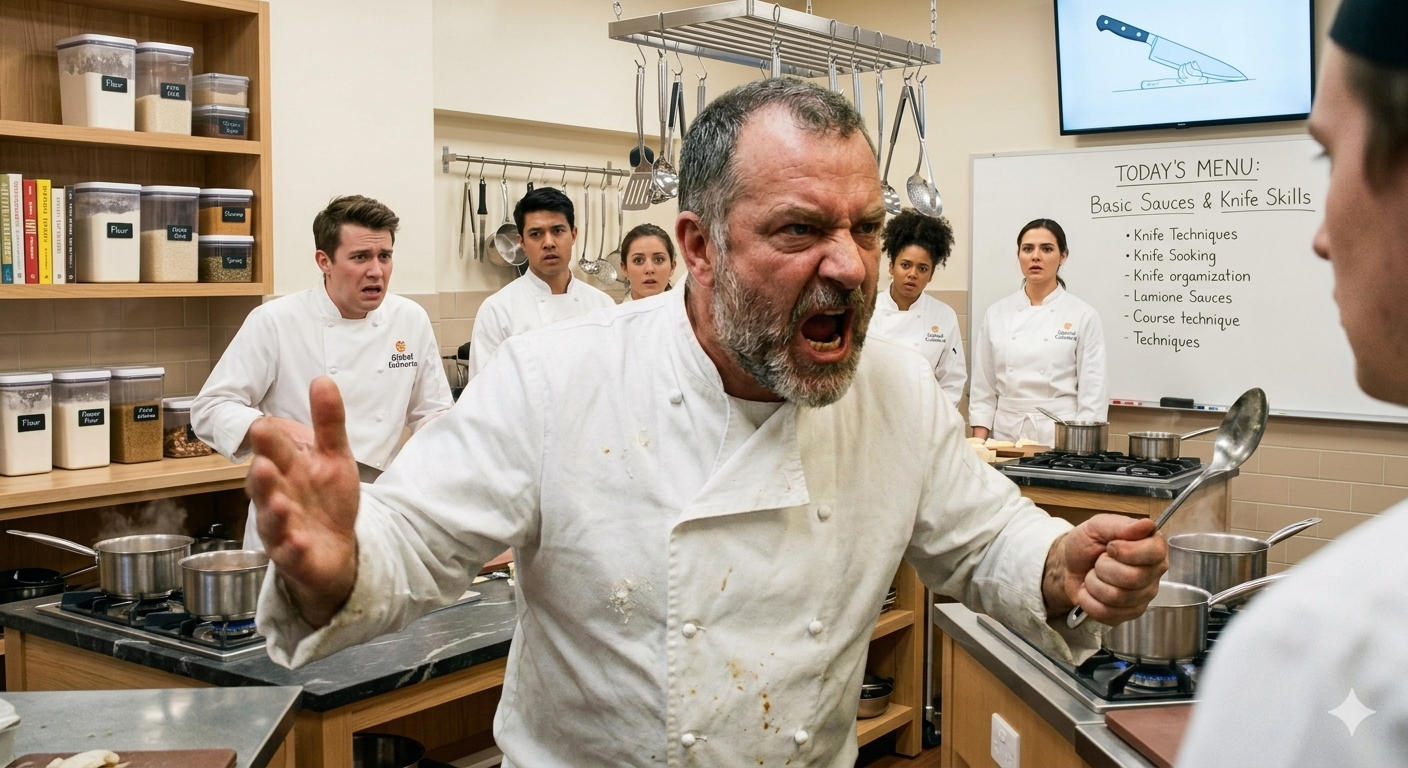
Chef Antoine Laurent had endured a grease fire, two divorces, and a food critic who once described his soufflé as "a deflated balloon of regret." However, nothing—absolutely nothing—had prepared him for the shock of seeing an accountant named James wielding a chef's knife as if it were a mysterious object from a crime scene.
This was meant to be the easiest part of Antoine's life, but it turned out to be the most agonizing. He couldn’t comprehend why others didn’t share his appreciation for cooking. All they needed to do was follow instructions—what was so difficult about that?
Chef Antoine Laurent had endured a grease fire, two divorces, and a food critic who once described his soufflé as "a deflated balloon of regret." However, nothing—absolutely nothing—had prepared him for the shock of seeing an accountant named James wielding a chef's knife as if it were a mysterious object from a crime scene.
"James," Antoine's tone was cool and composed, reflecting the restraint of a three Michelin-star chef with no patience remaining. "A knife is not a toy; it’s a tool. Put it down before you hurt someone," he said, sounding patronizing.
James's wife, Kenzie, two stations down, quietly set her knife aside and pretended to check her phone out of secondhand embarrassment.
This was meant to be the easiest part of Antoine's life, but it turned out to be the most agonizing. He couldn’t comprehend why others didn’t share his appreciation for cooking. All they needed to do was follow instructions—what was so difficult about that?
Six months prior, he left his restaurant to his beloved niece, the one with an eighteen-month waitlist, outstanding reviews, and, moreover, the one that had slowly been draining him for fourteen years. No more 4 a.m. fish deliveries, shouting at line cooks over tiny imperfections in a brunoise, or returning home at 1 a.m., pouring a glass of wine, and staring at the wall, having forgotten what silence was.
Cooking classes felt like a dream—small, relaxed groups with eager students paying him to share his knowledge. He imagined wine, laughter, and light banter as he taught proper chicken trussing.
The classes filled quickly. A Michelin chef personally teaching? People eagerly paid him. The first session had eighteen in a kitchen meant for twelve, buzzing with excitement, phones ready for a once-in-a-lifetime experience.
By the third session, four of them didn’t return. Two weeks later, the numbers dropped again.
Antoine initially missed the pattern, too horrified to notice that people didn't know how to handle knives or season properly. One woman tried to deglaze a pan with milk. With three decades of chasing perfection, Antoine couldn't ignore this; he corrected, demonstrated, sighed loudly, and made people redo their cuts twice or three times.
"This isn't a restaurant," Paula, his former sous-chef and now business partner, told him after class one night, observing him clean the counters with the focus of someone trying to erase a memory. "These people have day jobs, Antoine. They're here to enjoy themselves."
"Cooking is not fun," Antoine said. "Cooking is discipline."
"For you, maybe," Paula muttered as she walked out the door.
By the end of the eight-week session, six people remained, and four sheepishly admitted they wouldn't sign up again. Bookings for the next month dwindled. Antoine sat alone in his empty kitchen on a Tuesday night, surrounded by unused copper pots, and wondered if he'd traded one misery for another.
He considered shutting down his business and retiring completely, but that changed when Walter arrived at his class.
Walter arrived fifteen minutes late to a Thursday class, dressed in a luxurious cashmere sweater that likely cost more than an average kitchen renovation. His assistant booked the session spontaneously, casually mentioning an opportunity to meet the "chef from that place downtown". The first forty-five minutes were spent watching Antoine make a grown man sweat profusely while demonstrating the correct way to mince shallots.
After class, Walter lingered while Antoine wiped down the stations with his usual joyless efficiency.
"Can I be honest with you?" Walter asked.
Antoine, expecting a complaint, braced himself. "Of course."
"You're going to put yourself out of business," he noted.
Antoine paused mid-wipe. "Excuse me?" he asked.
I've dined at your restaurant twice now — truly incredible. I understand you've dedicated your life to perfection, which makes you brilliant. Walter leaned against the counter and said, "But not everyone in that room is you. Most of us are nowhere near your level. For us, this is just casual — a Thursday night outing, a chance to learn something new, enjoy a glass of wine, or maybe impress our spouse with a decent risotto. We're not aiming for a Michelin star. We just don't want to burn the garlic."
Antoine opened his mouth, then closed it again.
"You've got something rare here," Walter continued. "So split it. Run a beginner class — fun, fast, and forgiving. Easy recipes, good energy, and nobody gets yelled at for using a fork wrong. And — keep a Michelin-level class for the people who actually want what you used to give your line cooks. The ones who want to suffer a little, in a good way," he winked.
Antoine stared at him for a long moment. Then, slowly, he began to laugh — the first real laugh he'd had in months.
The beginner class started three weeks later. "Cooking, Casually." No corrections unless asked for. Music filled the room. The recipes were simple—sheet-pan dinners, one-pot pastas, a reliable roast chicken. Antoine joked around. He allowed people to burn food and laughed along with them. He poured wine generously and remained unfazed when someone used the wrong side of the cutting board.
The advanced class — "Michelin Method" — kept his old intensity intact, but now the people in the room actually wanted it. They signed releases, practically begging to be yelled at about knife angles.
Within a month, both classes became full. After two months, a waitlist appeared — an authentic waitlist, just like the old days at the restaurant, though this time Antoine left at 9 p.m. smiling.
Walter came back about six weeks later, this time for the beginner class, grinning through an admittedly lopsided galette.
Antoine told him afterward, shaking his hand sincerely, "You saved my business," because he truly meant it.
Walter shook his head, pulling on his coat. "No, I didn't save anything. I just broadened your horizons a little." He smiled. "You were so focused on perfection and excellence that you forgot to see the bigger picture."
Antoine looked around his kitchen — at the wine glasses, the lopsided galette on the counter, and James in the other room's corner, proudly showing his wife a knife cut that was, for the first time, almost even.
"Yeah," Antoine said. "I guess I did."
The Wife’s Pawn
Celeste Harrington, thirty-four, had a flawless face and an aesthetically perfect body, achieved through wealth and top surgeons. She possessed striking cheekbones that photographers adored and a laughter that filled any room. However, lately, she mostly found herself in empty spaces. Her husband, Richard, CEO of Harrington Energy, was in Dubai now and was scheduled to be in Singapore soon — either there or with whoever currently occupied his attention.
At first, she didn’t give it much importance, as she would offset her loneliness with shopping sprees, spa days, tennis lessons, Pilates at her country club, and wine nights. But the less importance she gave it, the more Richard withdrew.
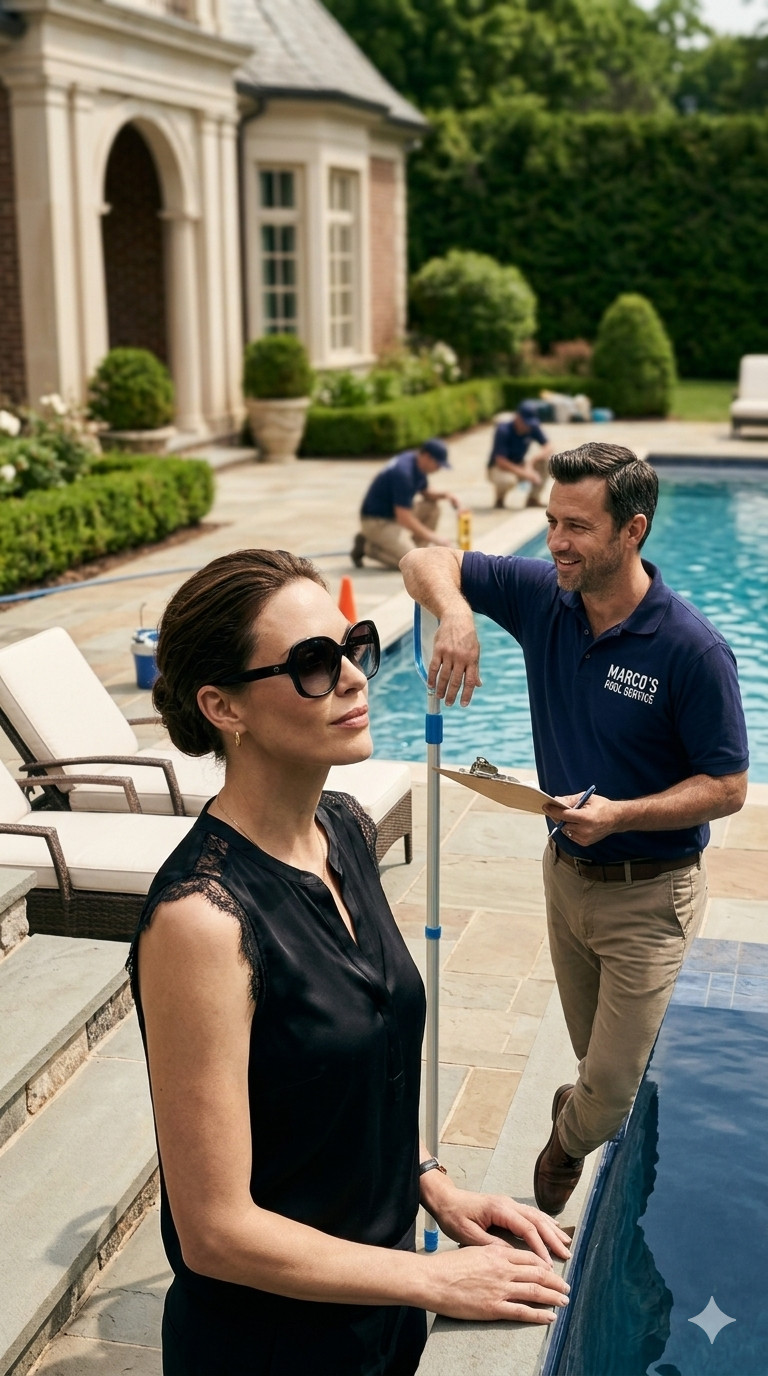
So when Marco arrived with the pool company one Tuesday in June, Celeste watched from behind her sunglasses and decided that two could play at any game Richard cared to invent.
The Harrington estate sat in the suburbs behind iron gates and manicured hedges, a monument to everything money could buy—luxury, comfort, prestige, and status, except, it seemed, a husband's attention.
Celeste Harrington, thirty-four, had a flawless face and an aesthetically perfect body, achieved through wealth and top surgeons. She possessed striking cheekbones that photographers adored and a laughter that filled any room. However, lately, she mostly found herself in empty spaces. Her husband, Richard, CEO of Harrington Energy, was in Dubai now and was scheduled to be in Singapore soon — either there or with whoever currently occupied his attention. She wasn't naive; she'd seen receipts and detected a faint, unfamiliar perfume on a shirt collar he'd sent to the dry cleaner without surprise.
At first, she didn’t give it much importance, as she would offset her loneliness with shopping sprees, spa days, tennis lessons, Pilates at her country club, and wine nights. But the less importance she gave it, the more Richard withdrew.
So when Marco arrived with the pool company one Tuesday in June, Celeste watched from behind her sunglasses and decided that two could play at any game Richard cared to invent.
Marco was twenty-four, golden from the sun, and completely unprepared for a woman like Celeste. She started simply — a cold glass of lemonade brought out on a silver tray, a sundress that left little to the imagination, a hand that lingered on his forearm just a bit too long.
By the third visit, they were passionately kissing beside the cabana, with Celeste having exchanged her sundress for an alluring white bikini.
By the fifth, she had led him inside the house, letting his chiseled physique evoke a feral side that her husband had ignored.
Each encounter grew bolder, fueled by equal parts desire, calculation, and passion. Celeste was not merely lonely — she was strategic. She knew Richard's security system covered every inch of the property's exterior. She also knew the patio camera had a wide, unobstructed angle and that Richard reviewed footage remotely when the mood suited him, which was more often than he'd ever admitted to her.
On a warm Thursday evening, she brought Marco a glass of wine on the patio — and what unfolded over the next hour was designed as much for an audience as for herself. She was unhurried, theatrical, and entirely deliberate. The camera's small red light blinked steadily in the corner of her vision. She didn't look at it directly. She didn't have to; she knew her husband would watch.
She called it her masterpiece.
Richard Hargrove was in a hotel suite in Geneva, pouring himself a glass of scotch as his secretary lay on the bed across from the bar in the presidential suite, when the notification pinged on his phone. He calmly sipped his scotch before opening the security app. He watched the footage twice. Then a third time, Celeste with a young man—Marco —his jaw tightened, and he vice-gripped his glass to the point where it almost exploded in his hand.
Eventually, he threw his glass against the wall, startling his secretary.
His initial instinct was to divorce quickly and cleanly, like a surgical procedure. However, divorce could lead to negative press, which he wanted to avoid. It would involve lawyers, depositions, and gossip in his usual circles — boardrooms, charity events, and political dinners. It meant risking the loss of key investors and assets. Celeste on his arm was a valuable asset he had quietly depended on for years. She knew which fork to use, which senator's wife to flatter, and when to laugh appropriately. Replacing that social stability was much more complex than simply replacing a wife.
He placed his phone face-down on the marble counter, considering the most efficient and discreet way to resolve this issue.
Ultimately, he decided the pool guy was a simple fix.
A week later, Marco stopped appearing. The pool company sent a different technician and offered no explanation. Marco's apartment was empty, and his phone number was redirected to a generic voicemail. He quietly disappeared from Celeste's world with the quiet efficiency that Richard applied to all inconvenient things.
Celeste observed but said nothing. She knew Richard was involved and that her plan had succeeded.
Richard arrived home on a Friday without any prior notice, which was uncharacteristic. He entered confidently, carrying his jacket over his arm, and found her reading in the sitting room as if everything in the world was perfectly normal.
They gazed deeply at each other across the room for a prolonged moment, filled with a blend of passion and raw longing.
He then crossed it, gathering Celeste into his strong, masculine arms as he had on their wedding night, and carried her to the bedroom.
Later, in the blue dark of their bedroom, with the city lights glittering distantly beyond the curtains, Celeste pressed her lips to his jaw and smiled a slow, private smile.
"Checkmate," she whispered.